
How to Spot a Fake OnlyFans Page Before Following
Spotting a fake OnlyFans page before you follow or pay is a skill that saves money and time. This article proves which profile signals reliably separate genuine OnlyFans pages from impersonators and scam accounts. The checks below take only a few minutes each and use information the platform already shows you. No technical tools are required, only careful reading.
A genuine account and a copied one often look similar at first glance because scammers download public photos and rewrite a bio in minutes. The differences appear in account age, verification status, linked social profiles, and how the person communicates. Once you know which signals are hard to fake, the imitation pages become obvious. The sections below work through each signal in order.
Why Fake Pages Target Free Tiers
A free page sets its subscription price to $0 and earns through pay-per-view messages and tips instead. That zero-dollar entry removes the main pause a subscriber feels, because nothing is charged at the moment of following. Scammers understand this and prefer free tiers for exactly that reason. The subscriber’s guard drops, and the first message arrives while trust is still forming.
On a paid page, the subscription itself acts as a small filter and a small commitment. Paid pages typically sit between $4.99 and $15, averaging $5-$10, while the full paid range runs from $4.99 at the minimum to $49.99 at the maximum. There is no base price below $4.99, though promotional first months may dip under it. A free page carries none of that friction, which is what makes it attractive to impersonators.
- The clone profile: a copy of a known creator’s name, photos, and bio, run by someone else entirely.
- The fabricated persona: a new identity built from stolen or AI-generated images with no real person behind it.
- The bait-and-redirect: a free page that quickly pushes paid chat, gift cards, or other platforms.
Practical tip: if a free page asks for money within the first few messages, stop and verify the identity before sending anything. A real creator rarely moves to payment requests before any rapport exists.
Profile Signals That Cannot Be Faked
Verification status is the strongest single signal, because the platform checks identity documents before granting a badge. A badge is not proof of good behaviour, but it is proof that a real person passed an identity check. An unverified account is not automatically fake, but it demands more cross-checking. Account age matters too, since a page created last week cannot have years of history.
Linked social accounts are the second strong signal. A real creator usually links a long-standing profile on another platform, and that profile has its own followers and posting history. A copied page often links nothing, or links an account created around the same time as the page. The timing mismatch is the tell.
| Signal | Genuine page shows | Copied page shows |
| Verification badge | Present after an identity check | Absent, or claimed without a badge |
| Linked socials | Old accounts with consistent history | New accounts, or none at all |
| Account age | Months or years of posts and activity | Days or weeks old |
| Bio detail | Specific, personal, consistent across platforms | Generic text reused elsewhere |
The Photo and Bio Check
Image theft is the simplest trick in the book, so a reverse-image search on two or three profile photos is worth the effort. If the same images appear on unrelated accounts, the page is reposting them. Consistent lighting, background, and camera quality across a set of photos is a weak sign of authenticity, not proof. Absence of any candid or unpolished shots deserves a second look.
Bio text follows patterns too. Scammers reuse the same phrases across many profiles because writing a convincing bio is harder than copying one. A bio that reads like a template, with no location, no interests, and no personal detail, is a warning sign. Cross-check the wording against the linked social profiles to see whether the tone matches.
- “No drama, just here to have fun.”
- “DM me on another app for faster replies.”
- “Cash app tips get priority.”
- “Limited spots, subscribe fast.”
- “My old account got banned, follow this one.”
A final photo check involves the profile picture itself. Reused images tend to be the creator’s most widely shared shot, because that is the one scammers find first. If the profile picture is the only image you can find anywhere online, and everything else on the page is unique, that is not necessarily suspicious. If none of the images appear anywhere else at all, the account may be manufactured from scratch.
Red Flags in the First Message
Communication style exposes intent faster than any profile detail. A real creator with a paid page may reply slowly or not at all, because incoming messages are numerous. A scam account often replies within seconds and immediately steers the conversation. The speed itself is a signal, not a courtesy. For a starting point, freeonlyfans cosplay collects free pages.
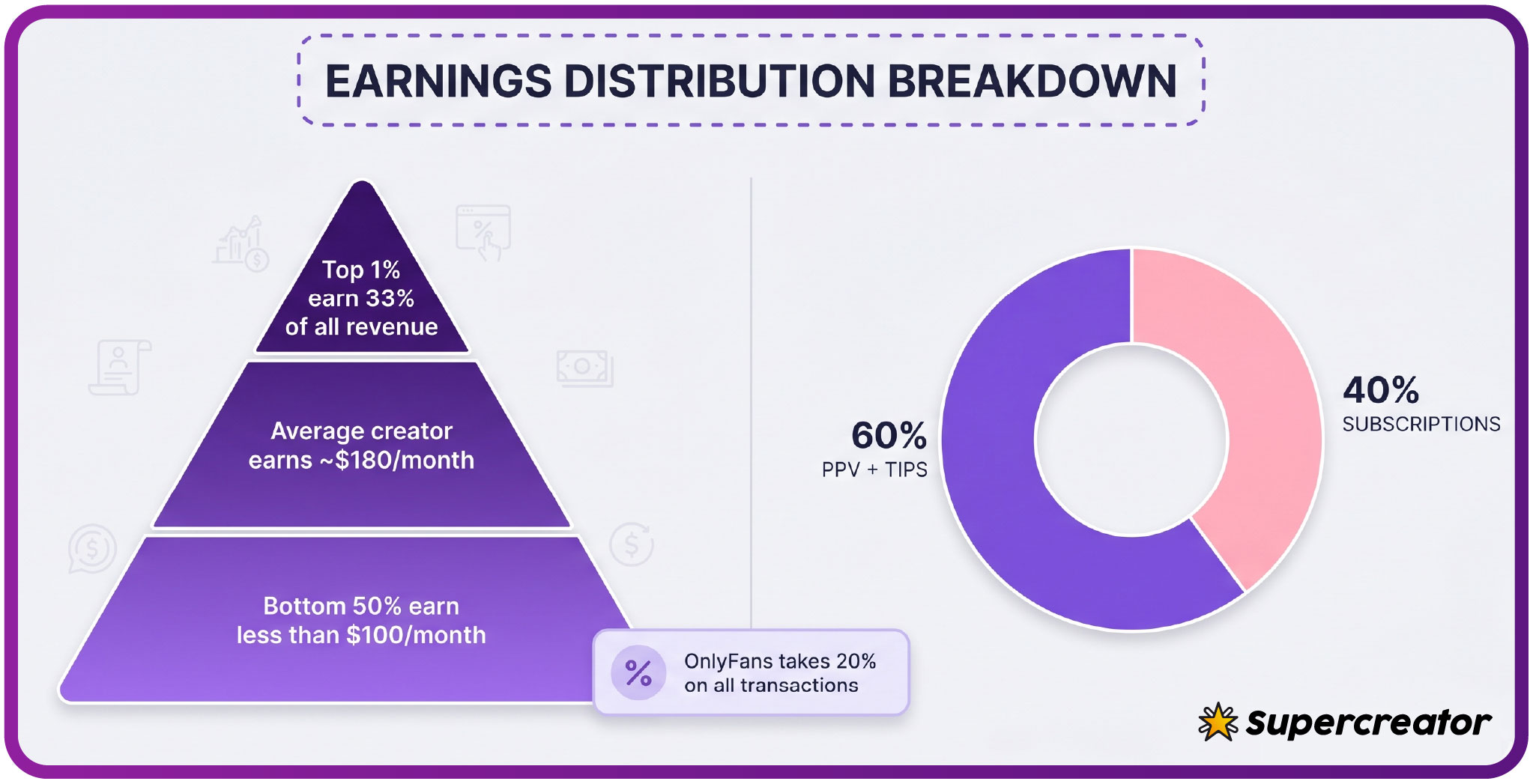
Payment requests outside the platform are the clearest red flag. The platform takes a 20% fee on everything, including subscriptions, tips, and pay-per-view, and the creator keeps 80%. Scammers ask for direct transfers precisely to avoid that fee and to remove any dispute process. Once money leaves the platform, there is no record the platform can act on.
- Immediate requests to move to another messaging app.
- Payment requests through gift cards, bank transfers, or payment apps.
- Urgency language such as “today only” or “before I close subscriptions.”
- Claims of a banned old account and a need to rebuild followers.
- Offers to send exclusive content in exchange for a direct payment.
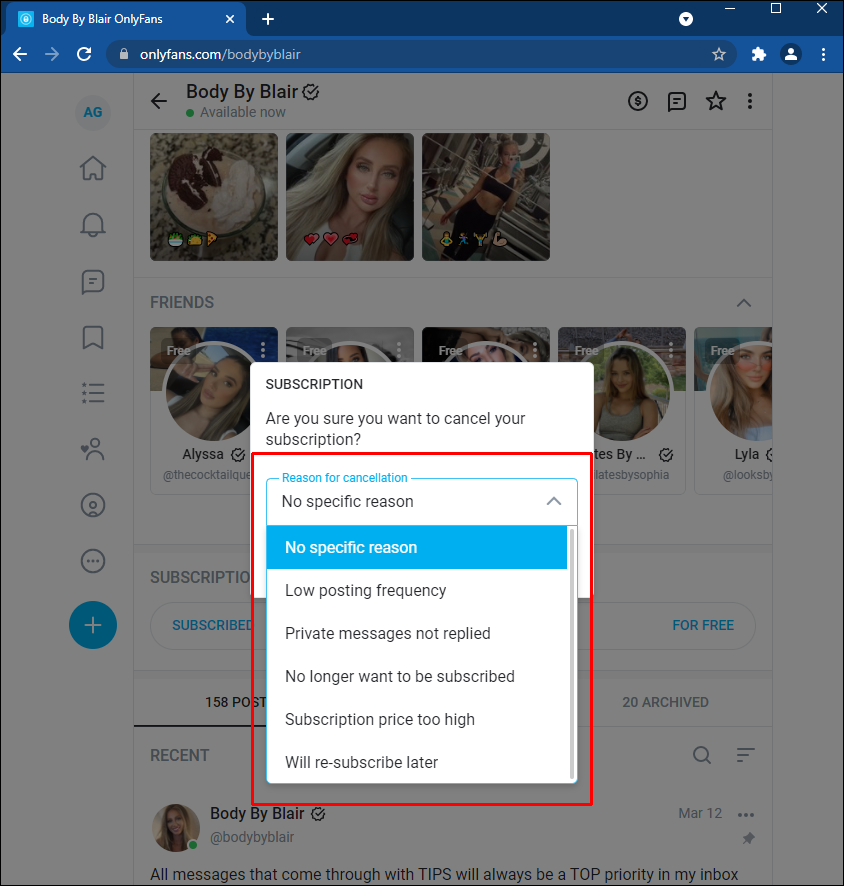
Warning: a subscription price change stops auto-renew, and existing access only lasts until the current paid period ends. If a page claims a price change will cut off your access immediately, that claim is false.
Cross-Checking Outside the Platform
OnlyFans has no built-in discovery feed or directory, which is why ranking sites exist. That absence also means a creator’s reputation usually lives elsewhere: on social platforms, on interview pages, on fan discussion boards. Checking those sources takes a couple of minutes and resolves most doubts.
Compare what each source proves. A social profile proves continuity over time. A ranking site proves that someone else has looked at the page and written about it, though quality varies widely. A news article or interview proves the person exists beyond the platform, which is the strongest external confirmation available.
| Source type | What it proves |
| Long-standing social profile | Consistent identity and posting history over time |
| Ranking or directory site | Independent review, but verify the listed links yourself |
| Interview or press mention | The person exists outside the platform |
| Fan community discussion | Other subscribers have interacted with the page |
For cosplay-focused pages in particular, cross-checking matters because costume photos circulate widely and are easy to repost. A guide to freeonlyfans cosplay pages can help you compare listing details against the creator’s own social accounts. Use any directory as a starting point, then confirm on the platform itself.
Reporting and Moving On
If a page fails the checks, report it through the platform’s reporting tools and then stop interacting. Reporting is fast and does not require proof beyond what you have already seen. Do not send a warning message to the account, because that only confirms you were paying attention.
If you already tipped or paid for a pay-per-view message, act quickly. Contact platform support with the transaction details and explain the situation. Recovery is not guaranteed, so treat any payment to an unverified page as money at risk from the outset. Document everything before the account disappears.
- Free page: $0 per month, with optional pay-per-view messages and tips.
- Typical paid page: $4.99 to $15 per month.
- Premium paid page: up to $49.99 per month.
- Platform fee on every payment: 20%, with the creator keeping 80%.
Budgeting matters here because several small subscriptions add up quickly. BestOnlyFans and similar ranking sites exist largely to help subscribers compare pages before committing money. Comparing first is cheaper than cancelling later.
A Five-Minute Verification Habit
Turn the checks above into a short routine you run before every follow. Start with the badge and account age, then scan the linked socials for matching history. Reverse-search one photo and read the bio for template phrasing. Finish by reading the first message, if one has arrived, for payment or urgency language.
BestOnlyFans publishes comparison pages that group creators by category, which shortens the research step but does not replace it. A listing is a claim, not a verification. The five-minute habit is what turns a claim into a decision you can defend.
- Following an unverified page because the photos look familiar.
- Skipping the reverse-image search because the bio seems detailed.
- Sending a tip before checking the account age.
- Trusting a linked social account without checking when it was created.
- Paying outside the platform to “save fees” or “unlock extras.”
BestOnlyFans is not the only directory, and no directory can confirm identity on its own. Treat every list as a starting point and every profile as unverified until the signals line up. That habit costs five minutes and prevents most of the losses described above.
FAQ
Can a fake page carry a verification badge?
No. The badge follows an identity check, so a page claiming verification without displaying the badge is misrepresenting itself. Treat the claim as unverified.
Is a free page automatically less trustworthy than a paid one?
No, but the zero-dollar entry removes the pause that a paid subscription creates. Apply the same checks to free and paid pages without exception.
What should I do first if I think a page is fake?
Stop interacting, report the account, and contact support if you have already paid. Do not message the account to announce your suspicion.
Does a price increase cut off my access right away?
No. When a creator raises the price, auto-renew stops, and existing access continues until the current paid period ends.